Introduction and background – October 2025
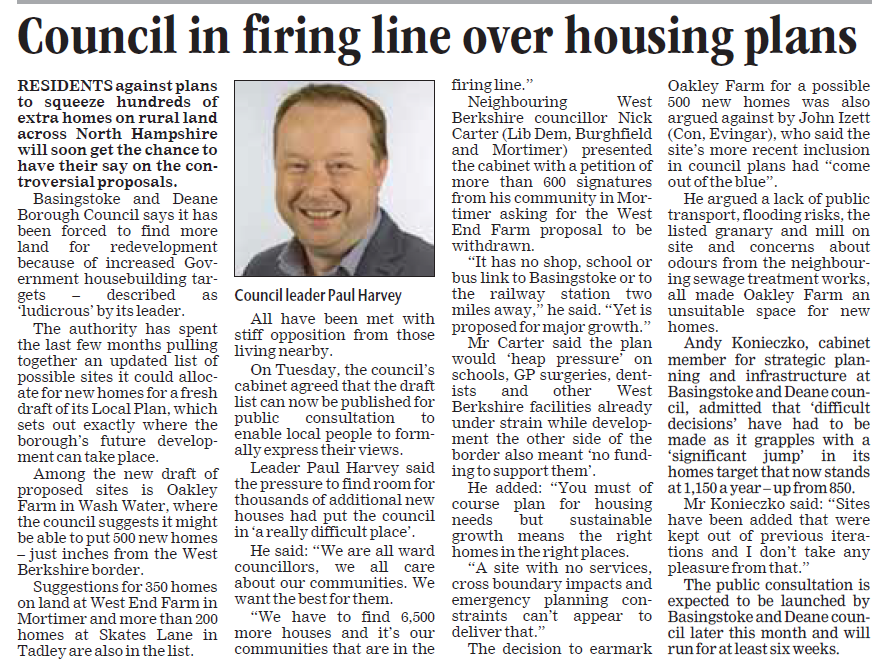
This outlines why the West End Farm site has appeared in BDBC’s Local Plan Update and what it could mean for Mortimer West End and Mortimer. Read the full article ↗
Information, background and answers to common questions
Page created · last updated
Skip to FAQs ↓Location of 350 houses
Basingstoke & Deane Borough Council (BDBC) has identified land at West End Farm, Mortimer West End as a potential site for around 350 homes in its Local Plan Update (2024–2042). The site sits immediately beside Mortimer (West Berkshire) and would function as a large extension of it. This page brings together information, maps and answers to common questions about the proposal and planning process.
The formal consultation (Regulation 18) has not yet opened, but there are steps residents can take now to make their views known and prepare.
If you’re unsure who to contact, see the quick reference list in FAQ 9 – Who should I contact?.
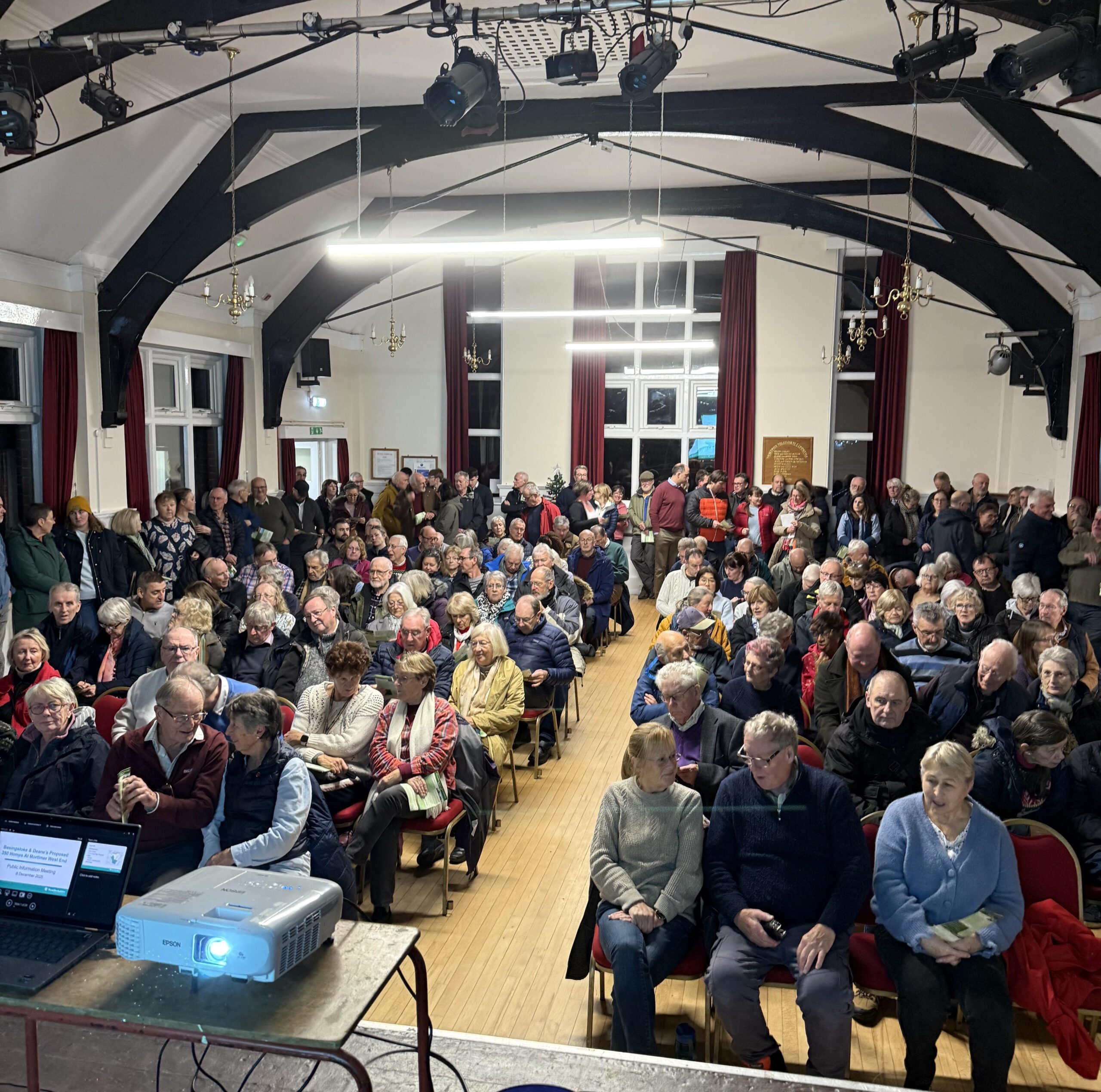
There’s a public meeting this weekend about the proposed 350 homes at Mortimer West End in Basingstoke & Deane’s draft Local Plan.
My view is that this location feels wrong — it’s remote, lacks public transport, and could add pressure on schools, surgeries and other local services — but above all I’d encourage everyone to take part in the official consultation when it opens in November. That’s when local views really count.
📄 Read my statement (PDF) · More info: this page (FAQs, contacts and links)
Public meeting this weekend on the proposed 350 homes at Mortimer West End. I believe the site’s the wrong location — but the key thing is to respond to the official consultation in November.
📄 My statement (PDF) · More info on this page.
Launched on 9 Oct. Stretch target set based on population.
This outlines why the West End Farm site has appeared in BDBC’s Local Plan Update and what it could mean for Mortimer West End and Mortimer. Read the full article ↗
Further posts and meeting notes will appear here once published.
A Local Plan sets out how much development an area needs and where it should go over a 15-year period. It identifies housing sites, infrastructure, and environmental protections, and guides future planning decisions.
No. The land is only a candidate site in BDBC’s draft Local Plan. It has no planning permission. It will first go through a Regulation 18 consultation and must be tested against evidence on environment, infrastructure, transport and deliverability before any decision is made.
These are the key questions the Local Plan process must answer. Before any housing allocation can be confirmed, Basingstoke & Deane Borough Council (BDBC) must work with:
Together they assess whether and how local infrastructure can support the proposed housing level — particularly its impact on school capacity, GP services, road access, public transport and drainage. BDBC’s evidence base must demonstrate that these needs can be met and funded before a site is allocated.
Infrastructure is normally funded through Community Infrastructure Levy (CIL) and Section 106 (S106) agreements with the developer:
If Mortimer GP Surgery cannot absorb additional patients, any expansion or new provision would have to be led by the NHS Integrated Care Board and the practice with evidence of need. S106 funds could contribute if justified, but CIL spending is at BDBC’s discretion within its area.
👉 Use this when objecting on infrastructure deliverability and funding (schools, GP capacity, access, drainage).
Mortimer West End is in Hampshire. Catchments usually relate to Silchester C of E Primary and The Hurst School, Baughurst. Families may apply to West Berkshire schools but priority goes to local catchments. Transport funding follows Hampshire criteria and is unlikely for out-of-county schools if nearer ones have places.
Councils start with the Government’s standard method for local housing need — a starting point, not a fixed target. The final housing requirement should reflect deliverability, infrastructure capacity and environmental limits.
Not necessarily. The Government’s standard method sets a minimum local housing need, not a fixed building target. Councils typically put forward a pool of sites larger than the minimum to allow for flexibility (non-delivery, infrastructure phasing, environmental limits). Which sites make the final plan is a policy choice that must be justified by evidence and pass the Inspector’s soundness tests.
When we say “less suitable” or “harmful”, we mean demonstrable issues such as: landscape/heritage effects, ecology (including protected sites/species), flood risk and drainage, highway safety and network capacity, health/education/service capacity, air/noise, emergency planning, deliverability/viability, and whether reasonable alternatives perform better in the Sustainability Appraisal.
👉 Use this when objecting on reasonable alternatives and soundness—ask BDBC to select less impactful, better-served sites if the candidate pool allows and evidence supports it.
BDBC Full Council, advised by planning officers and an independent Planning Inspector, decides which sites appear in the final Local Plan. Any allocated site would still need a planning application with its own consultation and decision.
The site is in Hampshire, within Mortimer West End Parish, bordering Stratfield Mortimer (West Berkshire). Although the homes would adjoin Mortimer, planning and most services fall under BDBC and Hampshire County Council.
See Have your say – How to Comment or Object for the up-to-date steps (email contacts, petition links, parish meeting info, and how to respond at Regulation 18).
For comments or objections (now and at Reg 18):
For factual queries or to share feedback directly:
Early emails show local interest and can influence how issues are framed, but only responses made during the formal Regulation 18 consultation will count as formal representations.
It could help private access, but not necessarily NHS capacity. NHS dentistry depends on commissioned contracts; a larger private practice does not automatically expand NHS places.
👉 Use this when objecting on health capacity evidence (NHS commissioning and practice capacity must be demonstrated).
The number starts with the Government’s standard method for local housing need — a starting point, not a fixed target. Where a Local Plan is out of date, the new plan must use the latest method, which often gives higher numbers.
BDBC’s 2016 Local Plan is out of date, so it must use the newer method — higher due to affordability and population data. Many ask whether faster progress could have locked in a lower figure, as West Berkshire did. The final requirement will be tested by an independent Inspector who may support a lower number if limits justify it.
See also Regulation 18 consultation and Regulation 19 consultation.
The old legal Duty to Co-operate has been replaced in the NPPF by a Policy Alignment Test. BDBC and West Berkshire are still expected to engage constructively across the boundary, agree evidence, and set out how cross-boundary impacts are managed (typically via Statements of Common Ground).
While BDBC is not obliged to copy detailed policies from the Stratfield Mortimer Neighbourhood Plan (e.g., mix, height, density), the NPPF expects context-sensitive design and gentle edge transitions. A refreshed Neighbourhood Plan and/or a simple design code can therefore be influential if they are:
Bottom line: a coordinated parish position (both sides of the border), backed by design-led, proportionate evidence, can shape any allocation’s form and phasing—even if it cannot veto it outright.
No. The Government’s “standard method” sets a minimum housing need; it is not a fixed building target. As noted in FAQ 5, the final requirement is tested against constraints and deliverability.
Current BDBC candidate sites reportedly exceed the minimum need to allow for flexibility (non-delivery, infrastructure phasing, and cross-boundary adjustments under the Policy Alignment Test). That means inclusion of this site is a choice that must be justified—not an unavoidable obligation.
The land at West End Farm lies outside the formal Detailed Emergency Planning Zones (DEPZs) set by the Office for Nuclear Regulation (ONR) for AWE Burghfield and AWE Aldermaston. The DEPZ is a single national boundary that spans local authority areas (WBC and BDBC do not have different DEPZs).
Although the houses lie outside the DEPZ so ONR may not automatically object, the DEPZ can change over time and local mapping indicates the site lies within Outline Planning Zones (OPZs). Any proposal here would still need to satisfy emergency-planning considerations — such as evacuation routes, access for emergency services, and public-information duties. Given the scale of the proposed housing, this remains an important issue to raise in any objection or consultation response. The ONR and emergency-planning authorities will be consulted formally if the site progresses further.
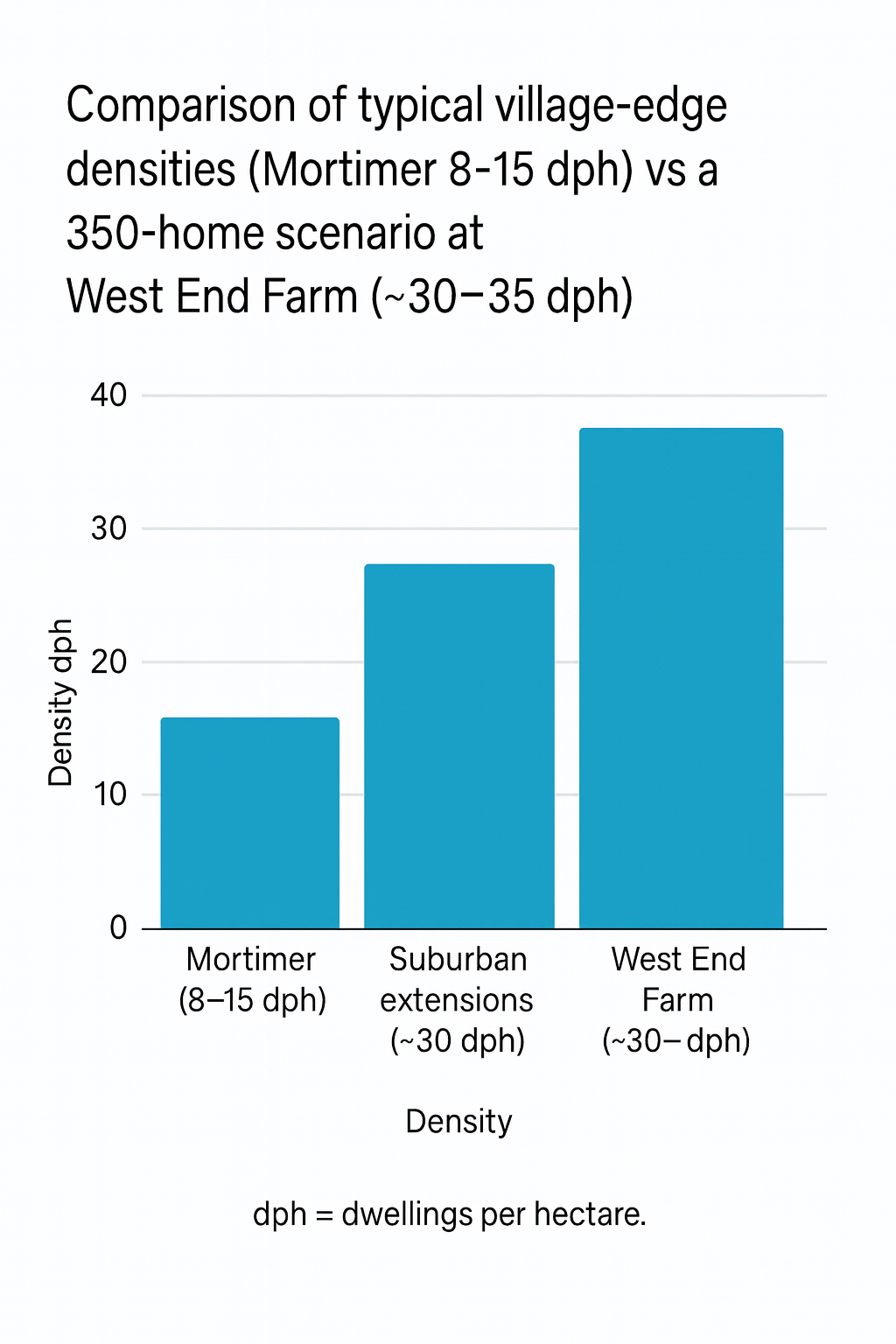
The proposed 350 homes would occupy roughly the full West End Farm site area. That equates to around 30–35 dph (dwellings per hectare), higher than the 20–25 dph acceptable densities that the Mortimer Neighbourhood Plan might identify as typical of the village’s edges and “gentle transition zones.” Older parts of Mortimer average nearer 15–20 dph, while newer infill estates reach 27–30 dph but are described as “more suburban in feel.”
On a developable area of roughly 10–11 hectares, the relationship between density and housing numbers is approximately:
A layout closer to 20–25 dph would better reflect Mortimer’s prevailing pattern, still allowing a mix of 2-, 3- and 4-bed homes, affordable housing and about 5 % self-build plots (as mentioned in BDBC’s draft plan), while providing a softer visual and landscape transition to the countryside.
👉 Use this when objecting on character, scale and design-fit grounds — it demonstrates that a full 350-home scheme would exceed typical village-edge density and alter local character.
BDBC’s Local Plan Update includes provision for Gypsy & Traveller pitches across the borough. National policy expects councils to plan for an identified need, usually set by a Gypsy & Traveller Accommodation Assessment (GTAA). Pitches can be provided on small dedicated sites, as extensions to existing authorised ones, or occasionally co-located with larger housing sites to encourage integration.
At this early stage, BDBC has indicated that the West End Farm allocation could include some Traveller provision, but no confirmed number of pitches has yet been published. The final location and scale will depend on the GTAA and supporting evidence.
National planning guidance emphasises that new sites should be well-located for services, have safe access, and promote good relations with local communities. Equally, they should avoid areas with unsuitable access, flood risk or poor integration.
If you wish to comment or object, as with all other aspects, you're advised to focus on planning grounds: consider asking BDBC to publish the GTAA and site-selection evidence; explain why this site is considered preferable to modest extensions of existing sites; and test co-location at other strategic housing allocations closer to services or higher-capacity roads. Comments are best to made respectfully and considering location, access, design, screening, proportionality and integration.
👉 Use this when objecting on site selection and proportionality grounds (request publication of GTAA evidence and comparison of alternatives).
How does the nearby West Berkshire site factor in? West Berkshire’s provision does not discharge BDBC’s duty to meet its own need. However, when BDBC selects locations, it should consider distribution and cumulative impact—i.e., avoiding over-concentration in one locality, ensuring proportional access to services, and maintaining good relations through well-designed, integrated sites. These are planning-merit points residents can raise respectfully, focusing on location, access, design and proportionality—not on people.
Questions missing? Email Cllr Nick Carter.
When drafting your response, you may find these FAQs helpful:
You can also refer to Cllr Nick Carter’s example response for structure and tone.
These resources show the location and planning context for the proposed site:
Page created and maintained by Cllr Nick Carter, West Berkshire Council – Burghfield & Mortimer Ward.
Content last updated .
Cllr Nick Carter • West Berkshire Council – Burghfield & Mortimer Ward
[email protected] · 07447 557557
Official Local Plan queries (BDBC Planning Policy Team): to be advised
Back to top ↑